
Sample Analyses
Here are several samples of the kinds of analysis BeaconGIS can provide. Just click on any image to enlarge it for viewing. Other helpful articles and white papers are available via the Learn More box to the side.
Coverage Overlap
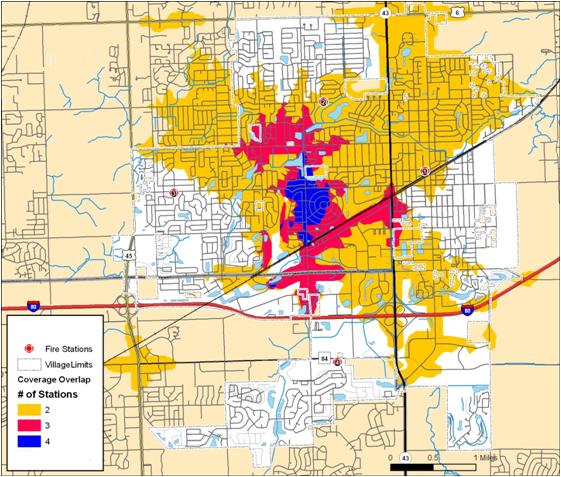
This analyzes any overlap in coverage where multiple apparatus are available if they were leaving their stations at the same time, revealing areas of best coverage and areas where a collection of units can be assembled to reduce redundancy.
Histogram
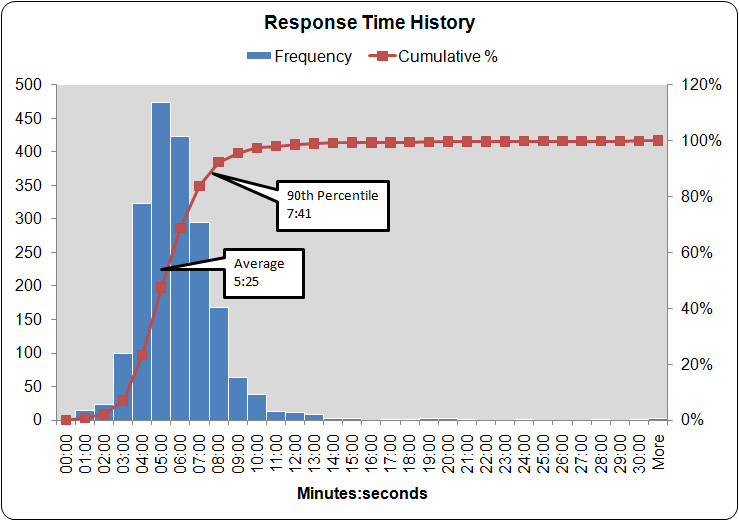
Evaluates the response time performance of a first response agency, measuring the most common response time and the average response time against the benchmark for response standards. For instance: The National Fire Protection Association (NFPA) recommends an urban, career department respond to fire emergencies in less than five minutes, 90% of the time.
Turnout
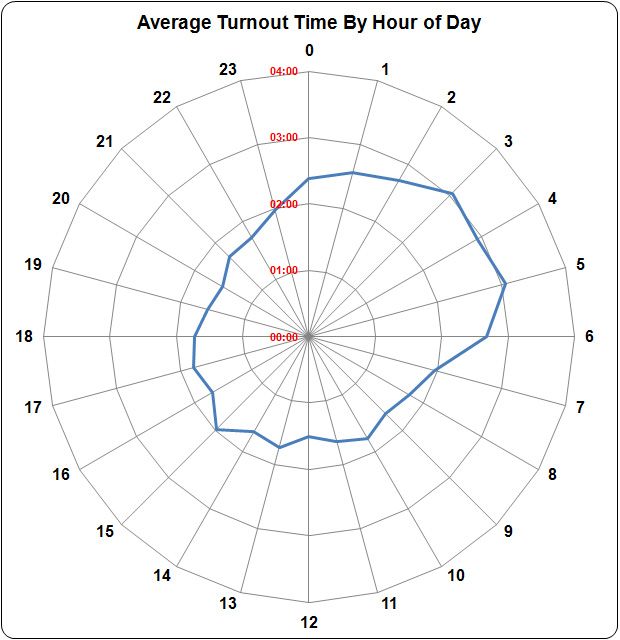
Evaluates the history of a unit or department’s time between the dispatch call and assembling the required personnel and apparatus to commence the trip. In this example, response took longer during night hours. Staffing policies or station configuration can play a role in extended turnout times.
Failure Rate
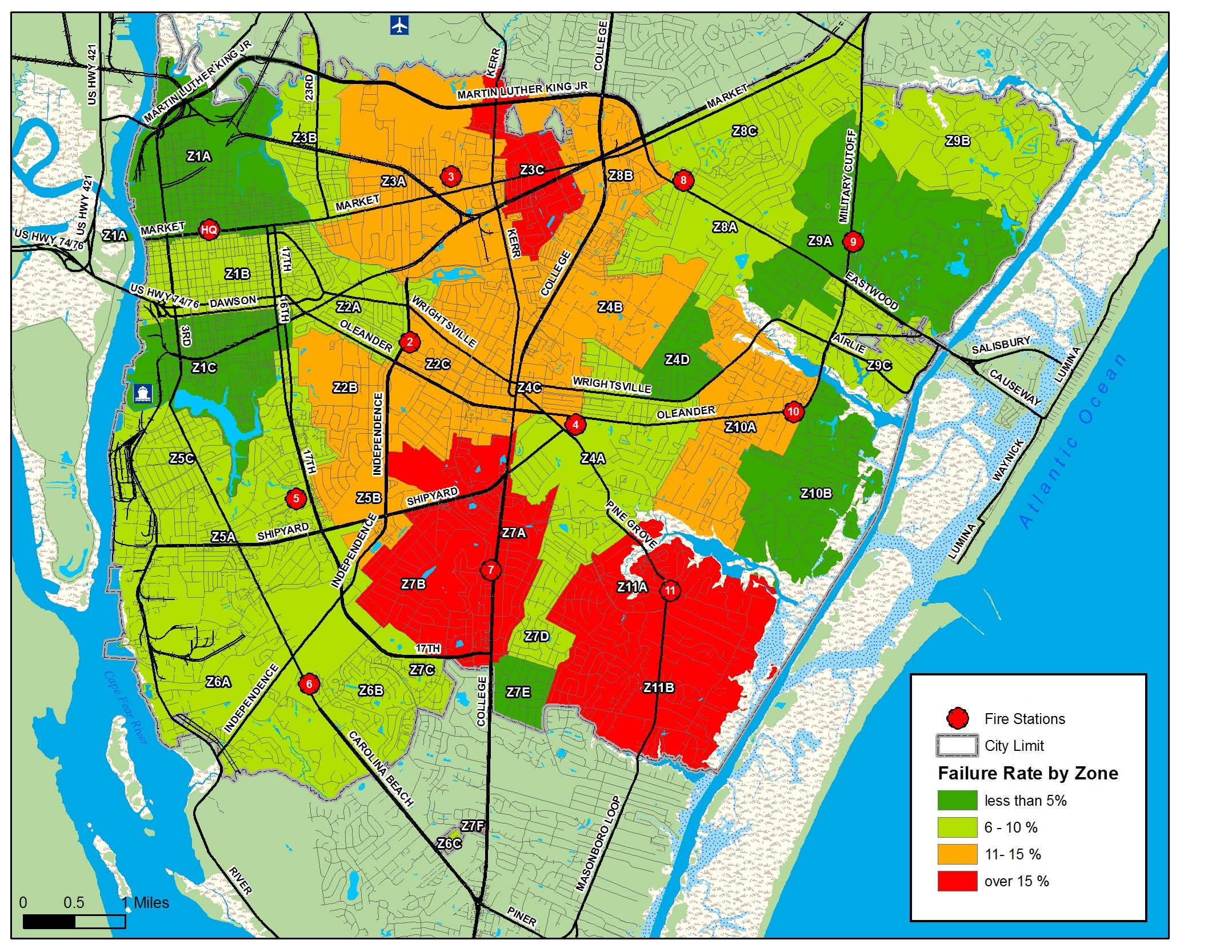
Measures the percentage of calls the host station failed to arrive first within their assigned area, an indication the area unit assignments may need to be adjusted or the unit is overtaxed and additional resources are needed.
Service Demand
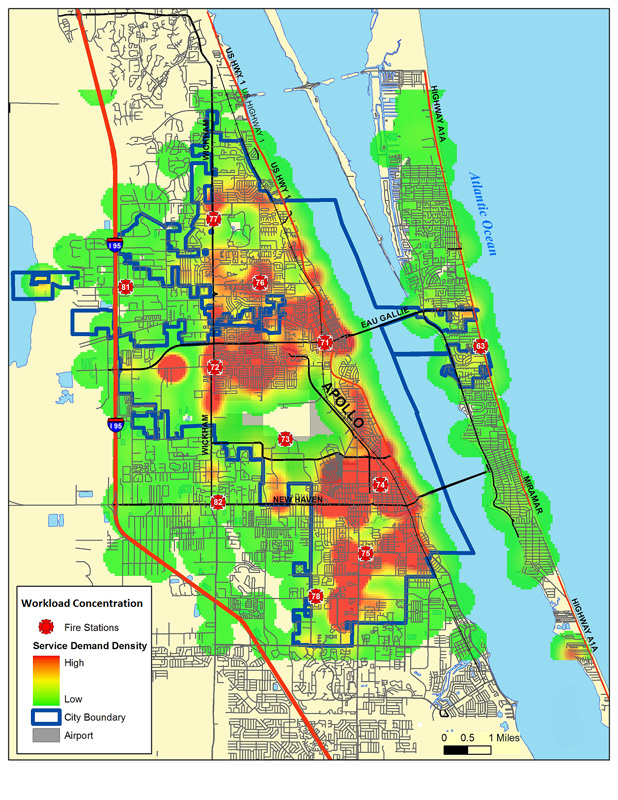
Illustrates where in the service area the higher volume of incidents occurs
Population
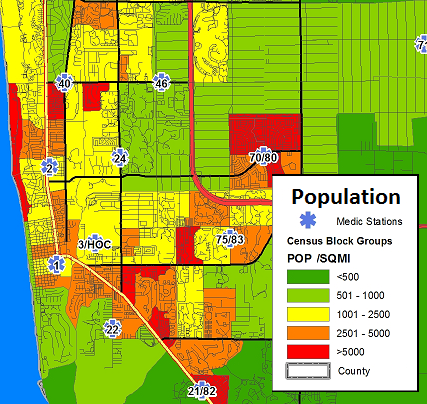
Higher concentrations of population directly correlate to demand for services, so it is important to compare these areas to unit locations and their ability to reach these populations in emergencies within an acceptable time.
Redundancy
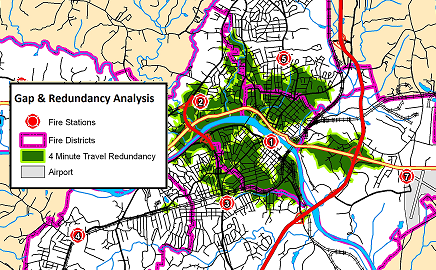
This analyzes any overlap in coverage where multiple apparatus are available if they were leaving their stations at the same time, revealing areas of best coverage and areas where a collection of units can be assembled to reduce redundancy.
Travel Time
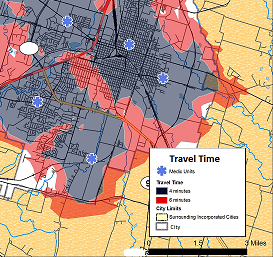
We model the geographic coverage of responding units, utilizing the existing street network and corresponding speed ratings. Analysis assigns penalties for units approaching, and negotiating/accelerating out of turns based on the angle of the street curves.